

A homeowner wants spring cleanup, weekly mowing in summer, leaf removal in fall, and maybe snow removal in winter. She visits a landscaper’s website and finds a single line: “Full-service landscaping.” She has no idea which services are offered, when to book, or what anything costs.
Landscaping businesses can win more customers by organizing services around the seasons customers actually think in.
Organize Services by Season
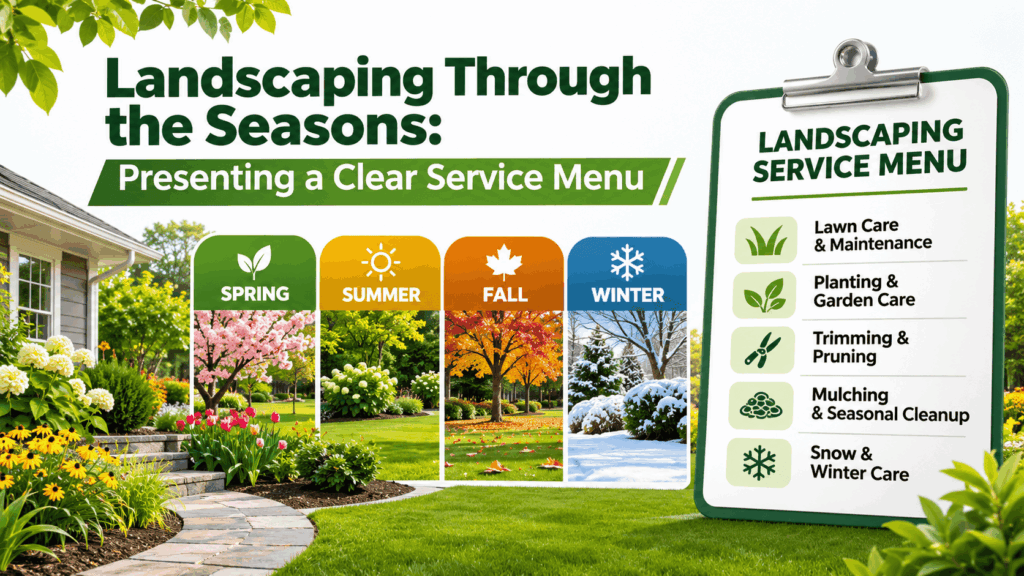
Group services into spring, summer, fall, and winter sections. Spring might include cleanup, mulching, and planting. Summer covers mowing, trimming, and irrigation checks. Fall includes aeration, overseeding, and leaf removal. Winter may include snow removal or holiday lighting if you offer them.
Under each service, describe what is included and whether it is a one-time job or a recurring visit.
Note booking windows, such as reserving spring cleanup in late winter, so customers schedule before your calendar fills.
Local conditions matter as well. Mention the regional factors that affect timing, such as the usual last frost date, typical rainfall patterns, or local watering restrictions. Homeowners appreciate a landscaper who understands the area, and this kind of detail shows expertise that a national lawn care chain may not offer.
Explain Pricing Approaches
Many landscapers price by property size, visit frequency, or job scope. Share starting prices for common services or explain how quotes are calculated. Annual maintenance packages can simplify decisions for homeowners who want year-round care.
Mention whether you require contracts for recurring services and how cancellations work.
Landscapers listed in the Home Decor and Garden category on Hub Directory can summarize seasonal services in their listing description, helping homeowners browsing garden and outdoor services see what you offer at a glance.
Keep Listings in Step With the Seasons
Update your Google Business Profile with seasonal posts and photos, and refresh your website banner as each season approaches. If you offer winter services, make sure your hours and availability reflect them; if you close for winter, say when booking reopens.
Before-and-after photos of seasonal work, such as a tidy spring garden or a cleared fall lawn, show results better than any description.
Conclusion
Homeowners think about their yards season by season. Organizing services that way, explaining pricing clearly, and keeping listings updated through the year helps landscapers book more work at the right times. Consistent information across your website, Google profile, and directories like Hub Directory keeps customers coming back each season.
Frequently Asked Questions
When should homeowners book spring landscaping services?
Many landscapers recommend booking in late winter, before the spring rush fills schedules. Publishing booking windows on your website and listings helps customers plan ahead.
Should landscapers offer annual maintenance packages?
Annual packages simplify decisions for homeowners and create predictable revenue for landscapers. Clearly list what is included each season, visit frequency, and cancellation terms so customers know what they are buying.
How do landscapers usually price their services?
Pricing often depends on property size, service frequency, and job complexity. Some services have standard rates, while larger projects require on-site estimates. Explaining your approach helps customers understand quotes.
Should seasonal landscaping businesses mark themselves closed in winter?
If you stop operating entirely, consider marking the business temporarily closed or updating hours, and note when you will reopen. If you offer winter services, keep hours accurate and promote those services instead.